

CRJ Cabin Modernization: How to Evaluate and Plan Upgrades
CRJ cabin modernization starts with a practical question for every regional fleet team: does the cabin still serve the people who fly in it every day? In practice, modernization means updating an in-service CRJ cabin to suit the aircraft's current role. The scope runs from a targeted refresh to a full reconfiguration. A regional flight is one leg of a longer journey. On that leg, passengers and crew judge the cabin by storage, comfort, function, appearance, and whether it is ready for the day's flying. That perspective also guides our work at GAL Aerospace: we start with the bins, surfaces and cabin layouts they use on every flight.
Why CRJ cabin modernization starts with everyday needs
Picture the last passengers boarding a busy regional flight. The bins above their rows are already full, so a carry-on may leave the cabin as a gate-checked bag, to be collected again on arrival. Near the front, a flight attendant is looking for somewhere within reach for a personal bag and the service items the job requires. Halfway down the aisle, a sidewall panel is scuffed and the trim does not match the aircraft the passenger flew on earlier that day. The aircraft may be mechanically sound, but the cabin feels neglected.
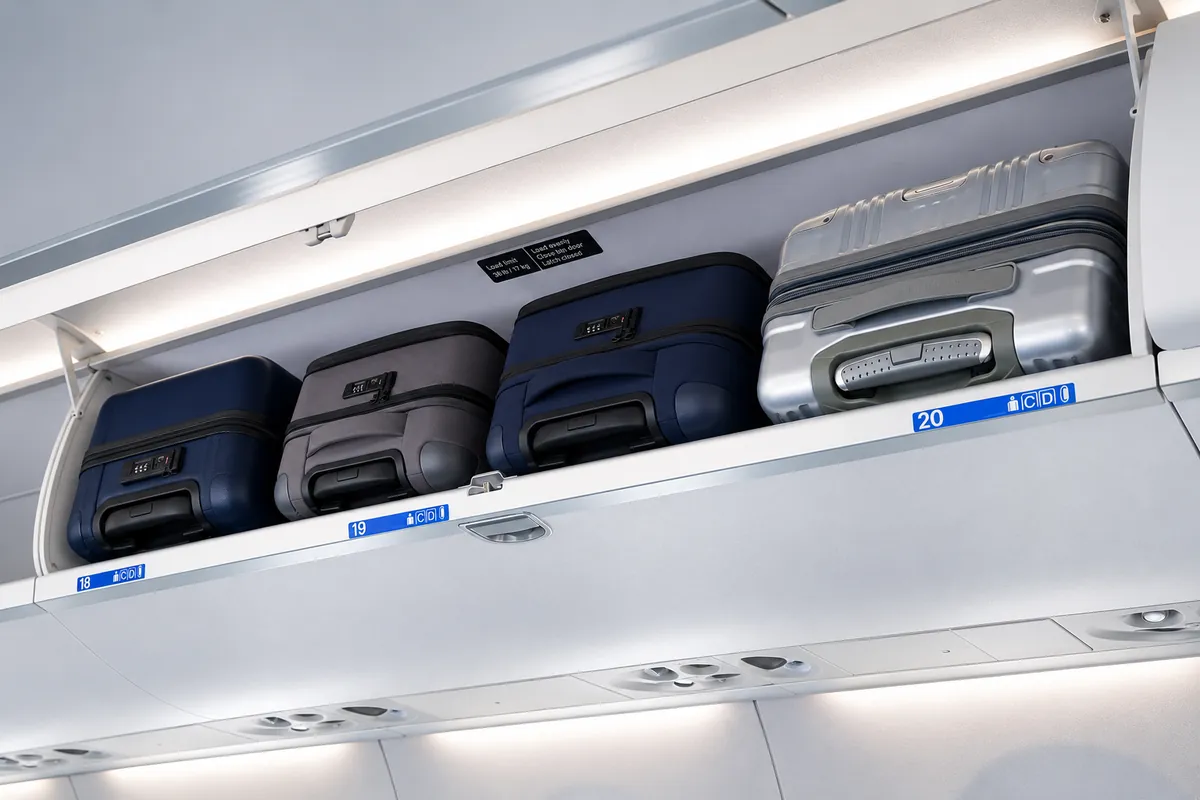
None of this is only cosmetic. The consequences are operational and commercial. Gate handling and crew workflow both depend on the installed cabin layout. So define storage, crew access and movement through the cabin as requirements before anyone selects hardware. When those requirements no longer match the aircraft's role in the fleet, the operator faces a broader decision.
Modernize, refresh, continue or replace? Start with the fleet plan.
That decision does not have to end in modernization. You can continue with the present cabin, refresh selected components, modernize more extensively, or plan replacement. One fleet plan may also combine these choices across different aircraft.
The first question is whether to fix what passengers see and use or to rethink the layout itself. For each aircraft, compare remaining utility, cabin requirements, capital allocation, engineering work, approval scope, downtime and replacement availability. An aircraft that will fly a core role for years can justify work that would make little sense on one nearing retirement. Sometimes new bins or refreshed surfaces are enough. Sometimes the layout is the problem. Either way, the plan has to fit the data available for the installed cabin. It also has to fit the maintenance windows in which engineering, certification, manufacturing and installation can happen.
Modernization may be worth evaluating without being automatically cheaper or faster. Whether it pays off depends on your own fleet and product plan, and in particular on which aircraft you are keeping and what you want their cabins to offer. Our aircraft cabin retrofit articles work through the questions that usually come next.
If a refresh or modernization is worth pursuing, the next step is to match each cabin problem to a technical option for the specific aircraft.
From cabin problems to technical options
CRJ is a family name, not one interchangeable cabin. Models, configurations, interfaces and certification bases can differ, so a result or approval on one model cannot be assumed for another.
If your fleet includes CRJ550s, CRJ700s or CRJ900s, Transport Canada's CRJ Series Operational Evaluation Report lists them among related aircraft, with the CRJ700 as the base model for the CRJ550 (Revision 5, July 2024). That relationship comes from a flight-crew evaluation, and the report is not a source of cabin approvals. Experience on one model can inform cabin work on another. Even so, each cabin needs its own approval basis.
The CRJ200 belongs to a different master series, so its evaluation starts from its own cabin and certification basis. That model is also drawing new cabin interest; the CRJ450, announced in March 2026, is a two-class cabin configuration of the CRJ200.
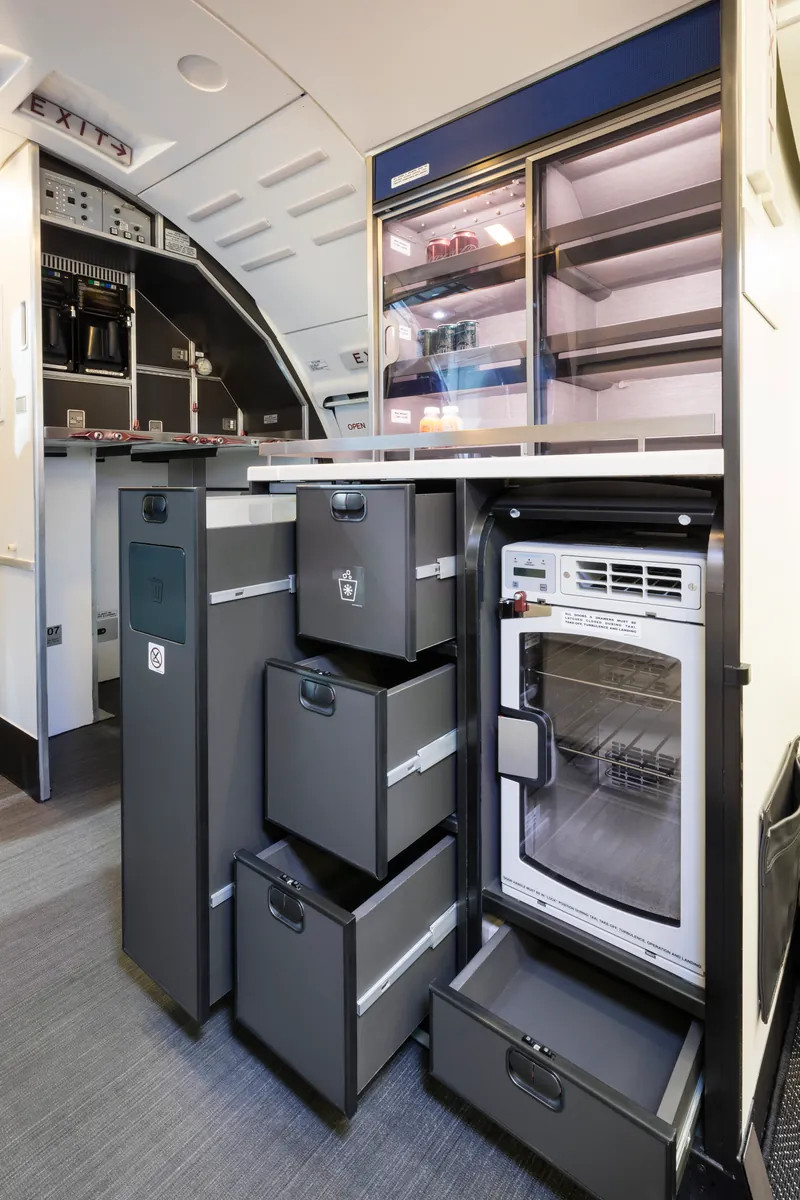
Once the aircraft is identified, each cabin problem points to a technical option. If carry-on space or crew stowage is the constraint, a CRJ cabin retrofit can address aircraft overhead bins, CRJ overhead bin upgrades and other aircraft cabin storage changes. Sometimes baggage and service needs have outgrown the layout itself. Selected cabin monuments and other storage structures can then be evaluated within a defined project scope. Worn or inconsistent surfaces are a different problem, and eligible interiors can be refreshed, from panels and trim to headliners, sidewalls and related surfaces. For crew work areas, countertops, cabinetry and selected service-area components can be considered if they are approved for the aircraft and the program. Where complete data are missing, measurement, digital capture, and interface work can help establish what the existing cabin provides.
Treat each of these as a candidate for evaluation, not a predetermined parts list or a delivery promised from another program. Whether an option applies depends on the actual model, the installed configuration, its certification scope and the approval path. Once engineering, manufacturing and certification support are planned for that specific aircraft, the options become a program.
Why operators work with us on regional aircraft interiors
At GAL Aerospace, our regional-aircraft cabin modernization work is built on an established position in overhead-bin retrofit solutions. We commissioned third-party market research, and it puts numbers on that position. In its August 2026 analysis, Counterpoint Market Intelligence estimates our share of regional-aircraft retrofit for luggage bins, also called overhead bins, at 86% in North America and 78% worldwide. Those shares describe bins alone, not aircraft interiors as a whole. Bins are where our reputation starts, and the panel and monument work below shows how far it reaches: Known for bins, experts across the cabin.
The engineering and manufacturing discipline behind our overhead bins extends across the rest of the cabin. The same analysis estimates our share of North American regional-aircraft retrofit at 84% in the interior-panels category and 61% in the monuments category.
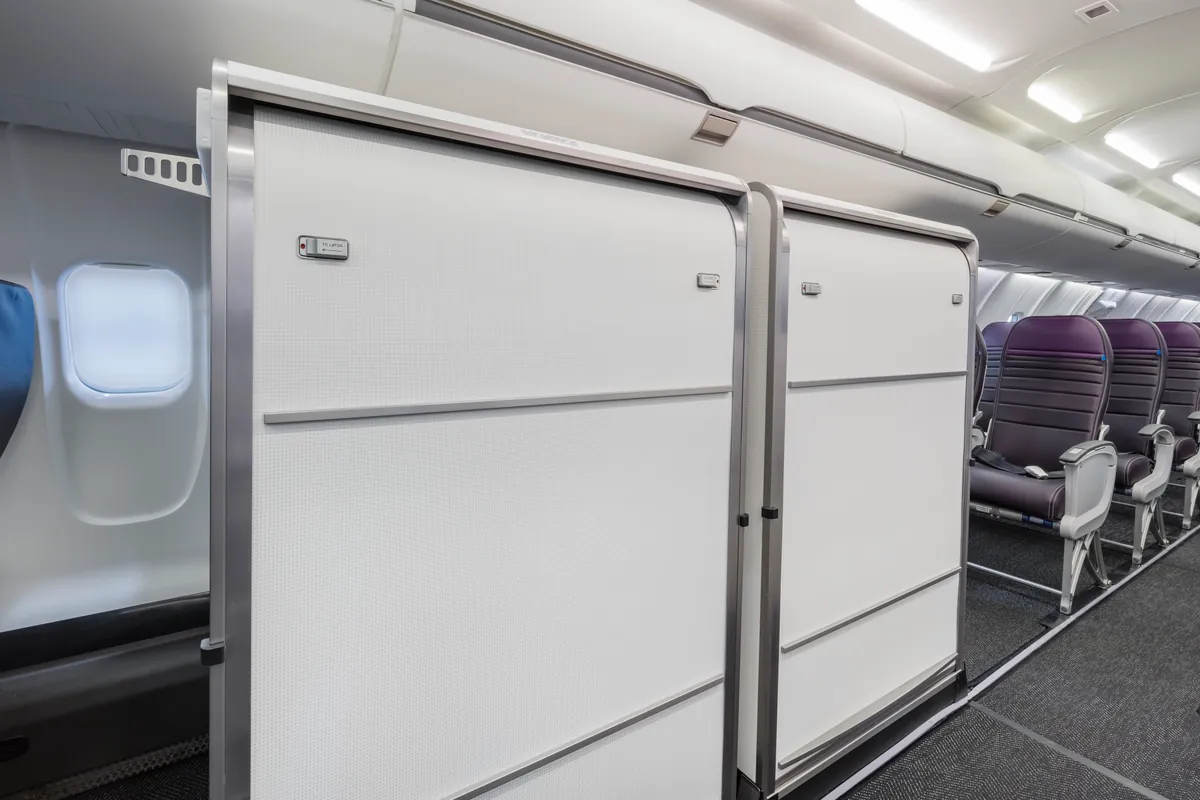
Beyond bins, our work covers selected cabin monuments and storage structures, interior panels and surfaces, and countertops, cabinetry and selected service-area components where they are approved for the aircraft and the program. For a specific CRJ aircraft, we can evaluate cabin storage, overhead-bin and interior options against its installed configuration and applicable approval requirements. Our flagship CRJ550 cabin reconfiguration, described below, shows our execution on a complex CRJ program.
We work closely with operators to develop cabin solutions around their aircraft, technical requirements and program priorities. Our approach combines engineering expertise, manufacturing capabilities and practical collaboration throughout the defined project scope. The work starts with your requirements and the aircraft's installed condition and interfaces. From there, we define the scope and clear roles and responsibilities, plan the evidence and approval pathway the change requires, and agree on the engineering work, manufacturing deliverables, documentation and kits we will supply. Design, manufacturing, supplier and installation responsibilities stay distinct throughout. You choose your installer.
Regional aircraft interiors differ from one fleet to the next, so we start from the aircraft as it is installed, not from a standard cabin. When complete original equipment manufacturer (OEM) data are unavailable, our engineering teams can use measurement, digital capture, fit analysis and interface reconstruction. That work respects approved data, data rights, intellectual-property boundaries and certification requirements. Our manufacturing capability includes interior panels, headliners, sidewalls, valences, bulkheads, trim, window ledges and related formed or composite structures. Where approved within program scope, we provide design support, engineering packages, supplemental type certificate (STC) support, certification documentation, manufacturing and installation kits. If you are evaluating an aircraft interior modification company, these are the capabilities to look for.
What our CRJ550 cabin reconfiguration program shows
Our CRJ550 cabin reconfiguration program is one of our flagship examples of regional aircraft cabin modification and execution. It brought engineering, manufacturing, certification support and kit supply together in a single effort, and we are proud of the record it left.
The scope went beyond a single cabin layout. Our CRJ550 program included five cabin configurations certified through Transport Canada.
On the aircraft itself, the first installation of a new cabin design is where execution becomes visible. Our CRJ550 program reached its first-article installation milestone in six months. Kit supply is measured differently. We delivered 30 cabin kits in 12 months as part of the program. That figure counts manufacturing deliverables supplied for installation, not aircraft or completed installations. Beyond the factory floor, the record follows the aircraft into service.
Our CRJ550 program also recorded this milestone:
8.5 Months
First STC to 9 aircraft in service
Certified configurations, the first-article installation, cabin-kit deliveries and aircraft in service each capture a different dimension of the work. They are separate measures, not one timeline. What they share is design, approval support and manufacturing working as one, and that combination is what a fleet team needs from a cabin partner.
These are historical results from this CRJ550 program, not commitments for future programs or other CRJ variants. What carries forward is the way we organize the work. On a CRJ200, CRJ700, or CRJ900, we would start again from that aircraft's installed cabin, scope, and approval path.
How engineering and certification make a modification executable
Engineering and certification are part of our first conversation with you. A new bin layout or monument only helps if it can be built, approved and installed on your aircraft. That depends on exactly what is changing, because the certification basis applies to the change. Transport Canada's AC 521-005 is guidance, not a set of regulatory requirements, and it looks at the complete changed product.
A Transport Canada STC can cover one serial-numbered product or several of the same type or model. In the United States, a party that does not hold the type certificate and introduces a major type-design change applies for an STC under 14 CFR 21.113(b). The exception is where 14 CFR 21.19 requires an application for a new type certificate.
The STC consists of the FAA's approval of that type-design change together with the product's existing type certificate (14 CFR 21.117(b)). An FAA field approval, using Form 337 (Major Repair and Alteration), applies to one serial-numbered aircraft. It is not a route for a whole fleet.
Suppose your change already has an FAA design approval and you also want it on aircraft registered in Canada. Under the FAA–Transport Canada bilateral framework, Transport Canada may accept that approval or require streamlined or technical validation, so it is worth finding out early which route applies. Acceptance is not validation. There is no automatic reciprocal certification under that framework.
For your team, certification planning means knowing early which approval route the change needs, what evidence it will take and how that work fits the aircraft's schedule. We aim to give you that clarity from the first conversation.
Talk with us about your CRJ cabin modernization.
CRJ cabin modernization comes down to fit. The everyday needs of passengers and crew set the requirements, and each aircraft's role in your fleet shapes the choice to modernize, refresh, continue or replace. The practical options follow from there, from aircraft overhead bins and cabin storage to monuments, panels and aircraft-specific engineering. We bring an established position in regional overhead-bin retrofit and expertise across the rest of the cabin. And our flagship CRJ550 program has already brought engineering, manufacturing, certification support and kit supply together on one complex CRJ reconfiguration.
Ready to discuss your CRJ modernization plans? Tell us about your aircraft and the challenges you want to solve. Send us an inquiry or choose an available time on our calendar to schedule a conversation with our team.