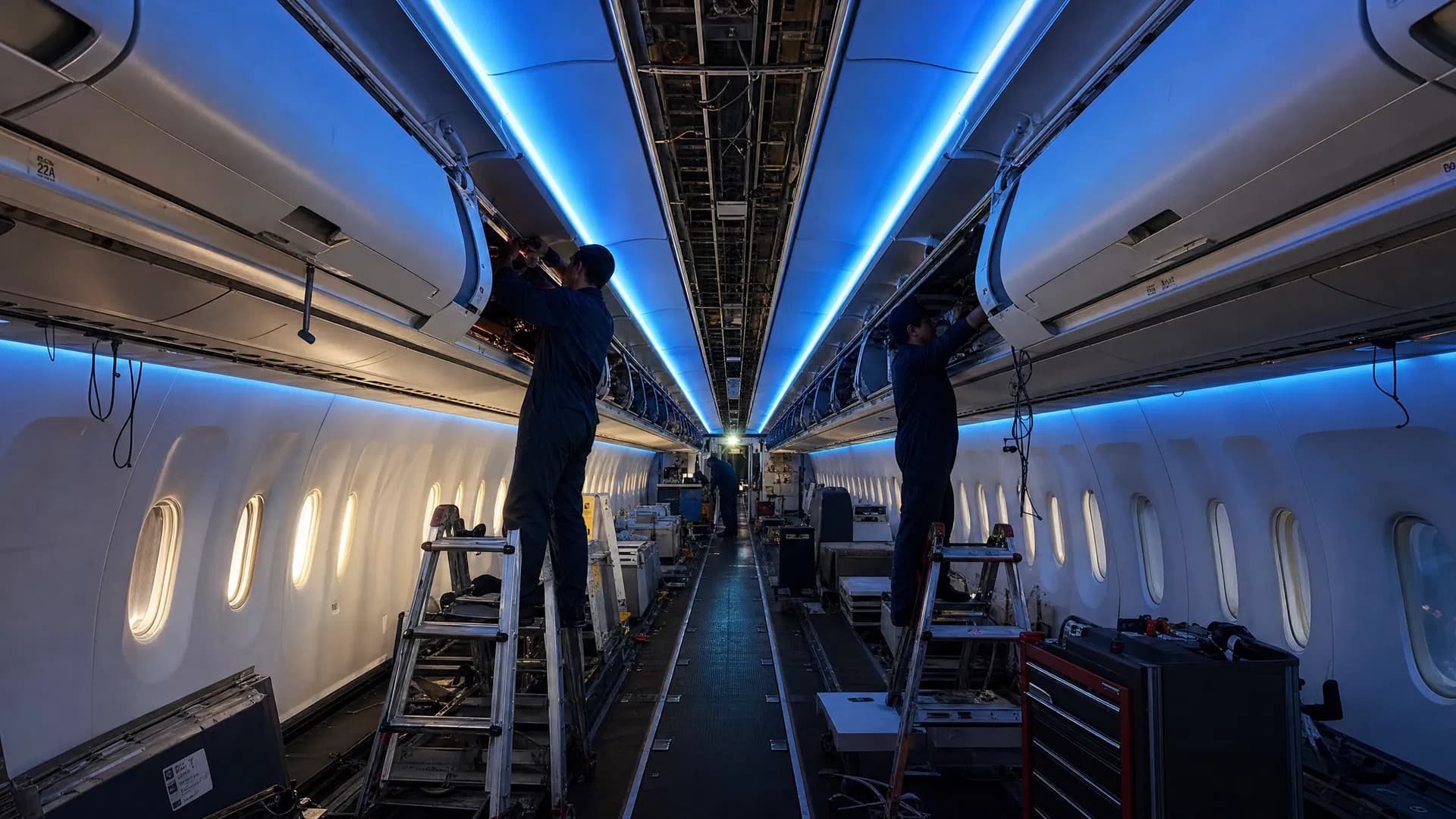
Fleet planners are facing a problem that did not exist at this scale a decade ago: the aircraft they ordered are not arriving on time, and the aircraft they already operate are getting older. For many carriers, an aircraft cabin retrofit has shifted from a periodic refresh into a core part of fleet strategy. This article looks at why that shift is happening, what it means for engineering and operations teams, and how to evaluate a modernization program with confidence.
The audience here is technical. If you manage fleet engineering, cabin programs, or modification budgets, the goal is to give you a clear view of the macro pressures and the practical options, without the marketing gloss.
The Aging Fleet Imperative for Aircraft Cabin Retrofit
The global commercial fleet has reached an average age of 13.4 years, up from 12.1 years in 2024. That increase looks small on paper. In practice, it reflects a structural change in how airlines are managing capacity.
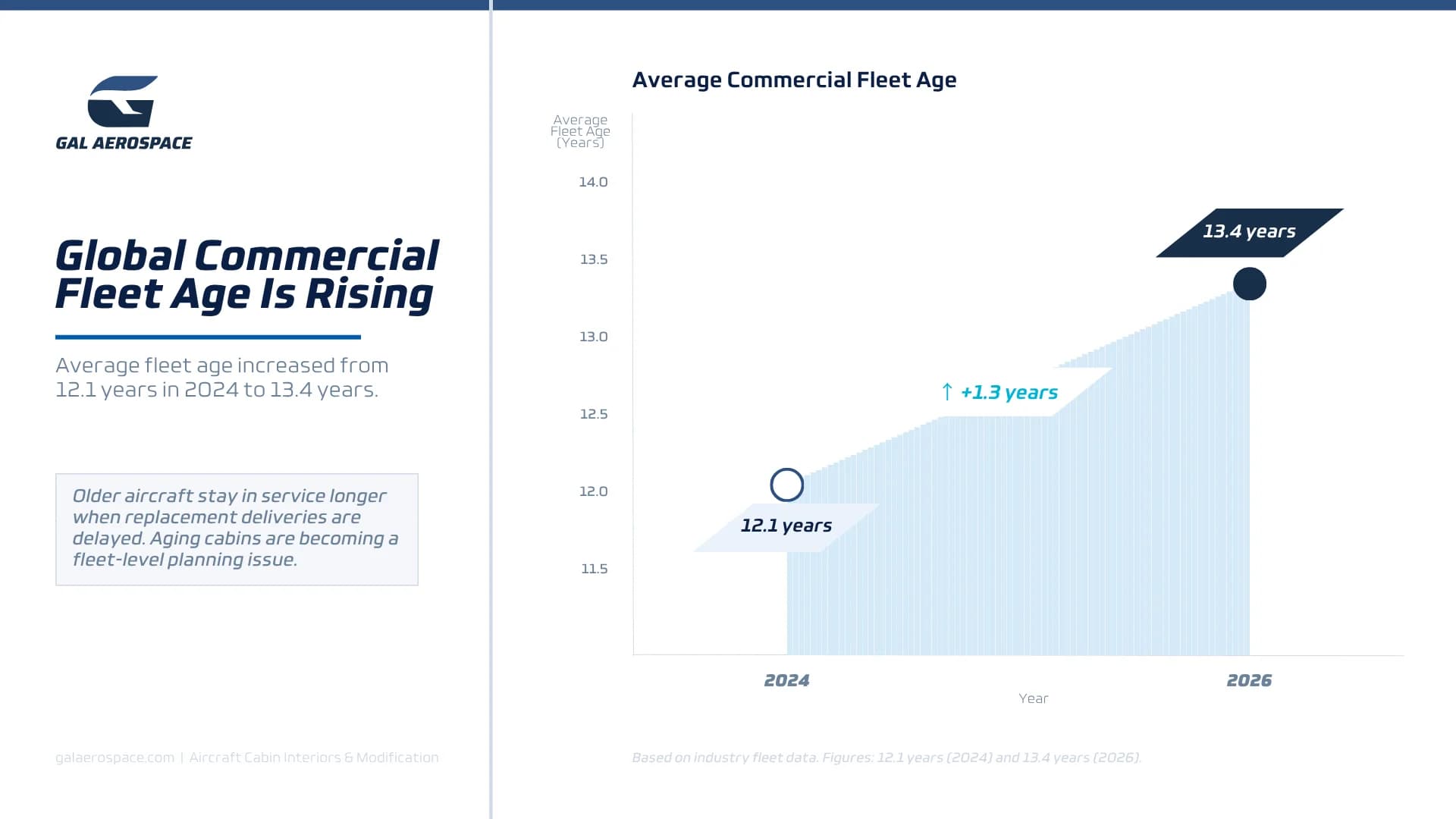
Airlines are not flying older aircraft because they prefer to. They are flying them because new deliveries are delayed, and the aircraft they have on order are not arriving on schedule. The result is a fleet that is aging faster than planned, with cabins that were designed for a shorter service life.
For engineering teams, this creates a concrete problem. Older cabins show wear that affects passenger perception. Overhead bins, monuments, lavatories, and galleys that were acceptable at year eight can become a liability at year fourteen. The question is not whether to address the cabin. The question is how to do it efficiently and on a certified basis.
The OEM Delivery Backlog Is Forcing a Retrofit Rethink
The delivery picture explains much of the pressure. Boeing and Airbus are currently delivering aircraft at rates roughly 30 percent below their 2018 records. At the same time, the global order backlog stands at more than 17,000 jets, which represents around 14 years of production at current rates.
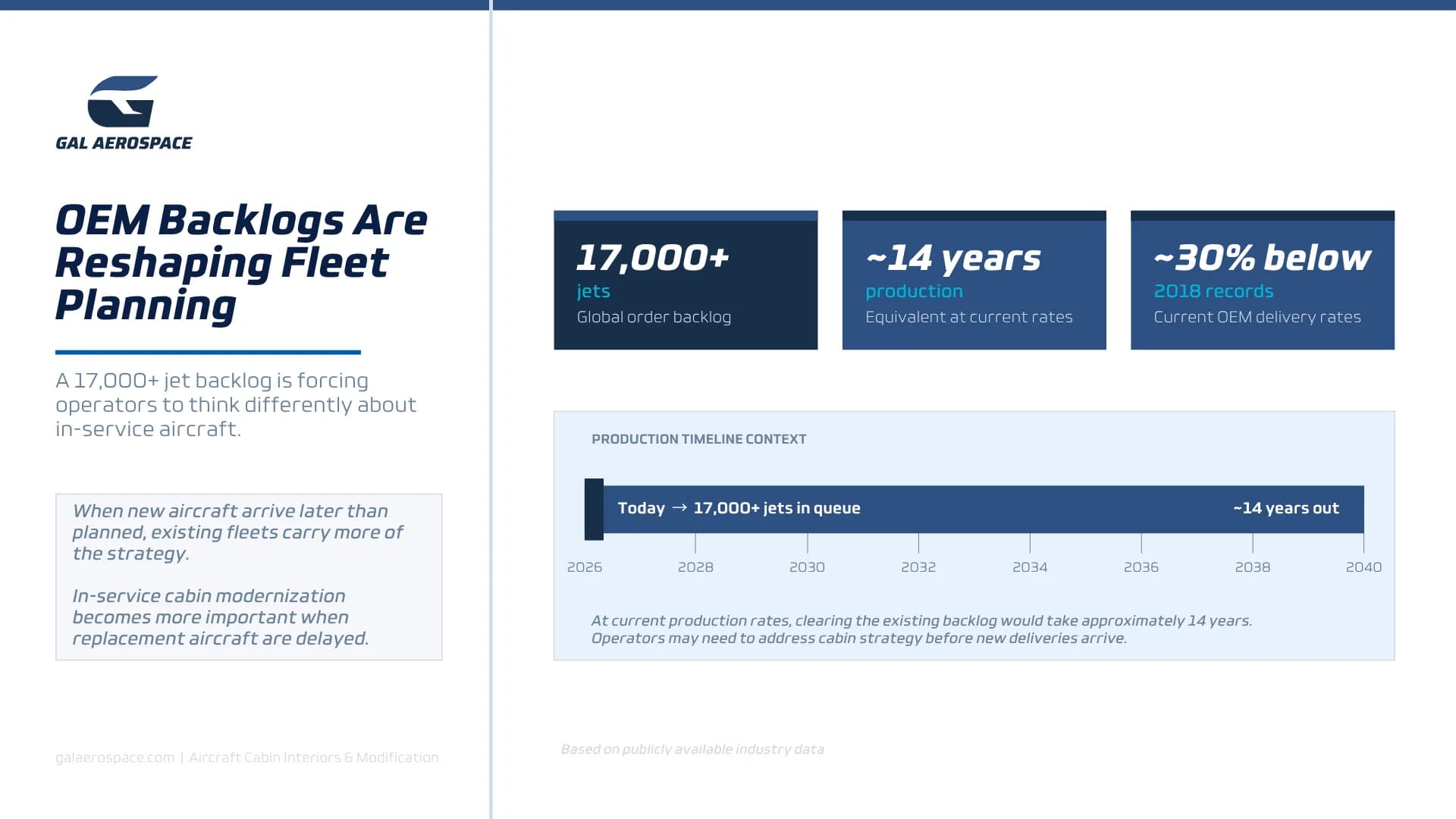
Put simply, ordering a new aircraft today does not solve a near-term capacity or cabin problem. The wait is measured in years, not months.
This reality reframes the decision for fleet teams. Waiting for new metal is no longer a complete strategy on its own. Operators that cannot take delivery on schedule still need to protect brand standards, maintain passenger loyalty, and keep their interiors competitive. A well-planned aircraft cabin retrofit lets them do that on the airframes they already control.
What an Aircraft Cabin Retrofit Actually Protects
It helps to be precise about what a retrofit delivers. A deep cabin refurbishment is not just new trim. Done properly, it restores or upgrades storage, monuments, panels, and finishes to a current standard while the airframe stays in service.
The commercial logic is straightforward. New line-fit aircraft carry significant capital cost and long lead times. A retrofit reinvests in an existing, already-certified asset. The result is a modern cabin appearance and improved functionality without the capital outlay of a new aircraft order.
There is a caution worth stating plainly. Each aircraft, scope, and program defines the potential saving or downtime impact. Anyone promising a fixed dollar figure before scoping the work is guessing. The honest framing is that a retrofit is a capital-efficient alternative when new aircraft are delayed, not a guaranteed number.
Why Narrowbody Fleets Are Central to Commercial Aircraft Retrofit
The opportunity is concentrated where the fleet is concentrated. Nearly 80 percent of the North American fleet is made up of single-aisle aircraft, primarily the Boeing 737 and Airbus A320 families.
These aircraft fly high-utilization schedules. They board and turn many times a day, which means their interiors age faster and their cabins are the most frequent candidates for refresh. Regional types, including the CRJ and E-Jet families, are entering their own modernization cycle as operators extend service lives.
For engineering teams, that concentration is useful. It means teams can develop retrofit solutions once on a common platform and apply them across a large portion of the fleet, rather than treating each aircraft as a one-off project.
How to Evaluate an Aircraft Cabin Retrofit Partner
Not all retrofit suppliers are equivalent. The differences that matter most to engineering teams are certification depth, platform experience, and integration capability.
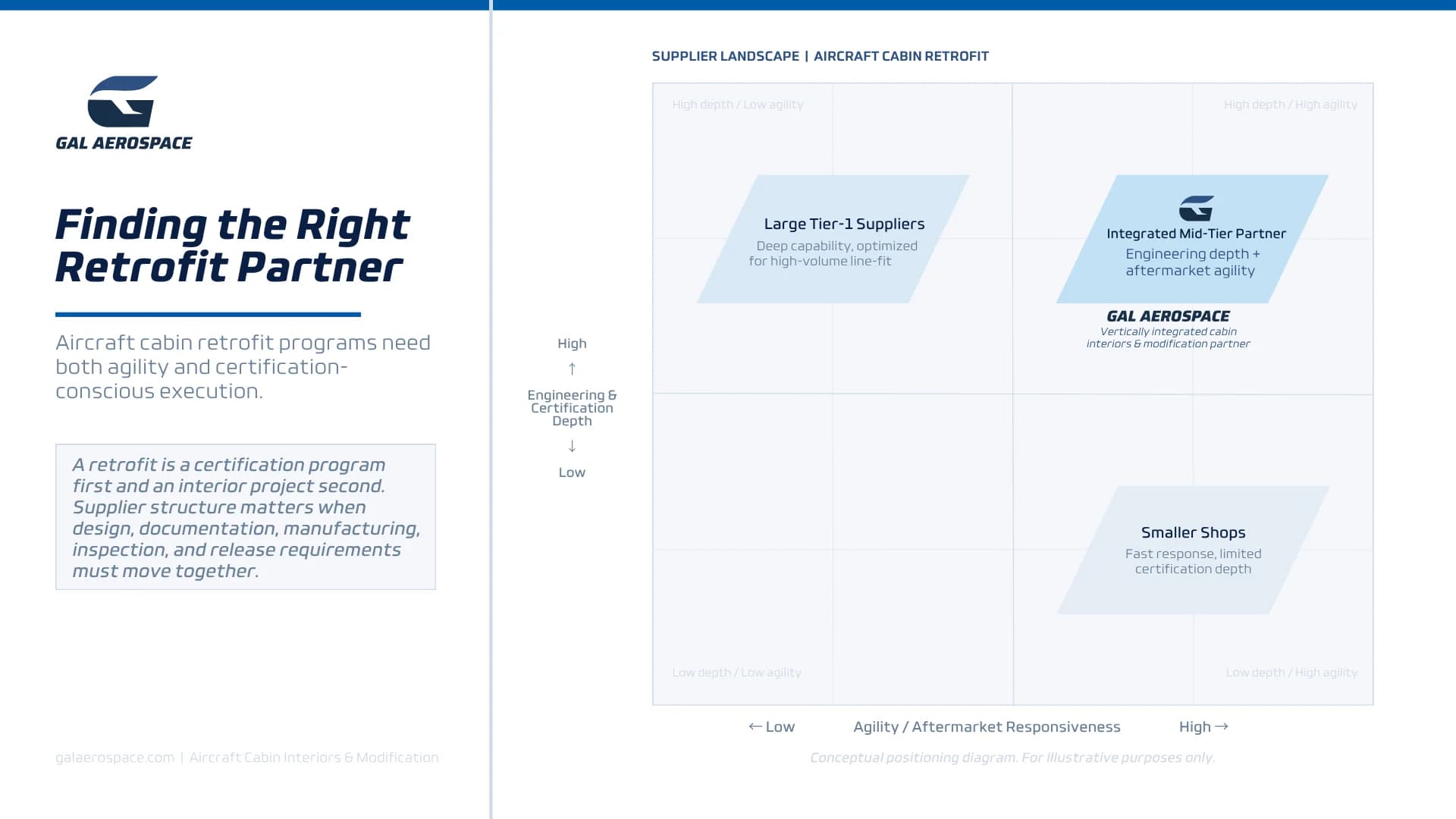
Certification depth means the supplier holds the approvals needed to support your program. Transport Canada, FAA, EASA, STC, CAR 561, and AMO status are not interchangeable. A supplier with the right approvals for your aircraft and jurisdiction removes a significant coordination burden from your team.
Platform experience means the supplier has already worked on your aircraft type. A retrofit partner that has completed programs on the CRJ, E-Jet, A320, or 737 families brings existing knowledge of the structural interfaces, certification basis, and installation constraints. That knowledge shortens the scoping phase and reduces the risk of surprises during execution.
Integration capability means the supplier can manage engineering, manufacturing, and certification under one roof. A fragmented supply chain, where design, production, and approval are handled by different parties, creates coordination risk and schedule exposure. A vertically integrated partner reduces that risk by keeping the critical path in fewer hands.
The Certification Requirement Is Non-Negotiable
Every component installed in a commercial aircraft cabin must meet the applicable airworthiness standards. For retrofit programs, this typically means obtaining a Supplemental Type Certificate or working within an existing approved design. The certification path depends on the scope of the modification, the aircraft type, and the jurisdiction of the operating authority.
Teams evaluating retrofit partners should ask directly about certification history on their specific platform. A supplier that has previously certified similar modifications on the same aircraft type can provide a more accurate timeline and cost estimate than one that is approaching the platform for the first time.
GAL Aerospace and the Commercial Retrofit Market
GAL Aerospace is a vertically integrated aircraft cabin interiors company focused on commercial aviation. The company designs, engineers, manufactures, certifies, installs, and supports cabin components and modification programs for in-service operators.
Certifications include Transport Canada, FAA, EASA, STC, CAR 561, FAA Repair Station, AMO, and AS9100 Rev D. Platform experience covers the CRJ family, E-Jet family, A320 family, 737 family, Q400, and other commercial types.
For airline fleet modernization programs, that combination of approvals and in-house capability is what allows a retrofit to move from concept to certified hardware without depending on a long chain of outside parties.
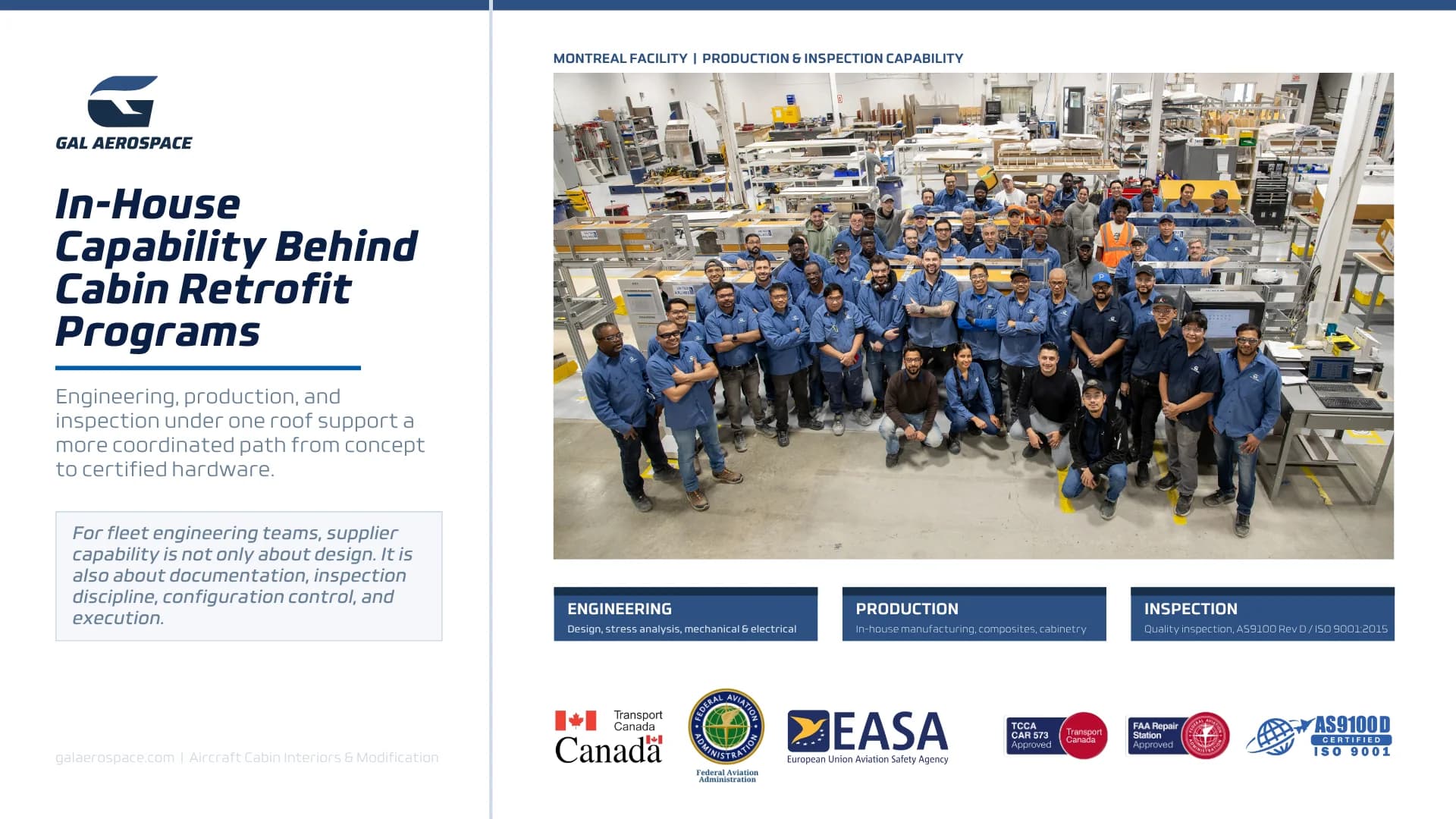
None of this removes the need for proper scoping. Every commercial aircraft retrofit still depends on the specific platform, configuration, and certification basis. The advantage of an integrated partner is fewer points of friction along the way, not a shortcut around the engineering.
Conclusion: Treating Retrofit as a Planning Decision
The aging fleet trend is not a temporary blip. With delivery rates suppressed and a backlog measured in years, operators will keep flying older aircraft for longer than they once expected. The cabins on those aircraft will need attention.
A planned aircraft cabin retrofit gives fleet teams a way to protect brand standards and passenger experience on the assets they already own, while new deliveries remain uncertain. The teams that treat it as a deliberate fleet decision, scoped early with a capable engineering and certification partner, will be in a stronger position than those that wait.
If you are evaluating cabin modernization for your single-aisle or regional fleet, GAL Aerospace can help you scope the engineering and certification path.
Start the Conversation
Ready to Scope a Cabin Retrofit Program?
Use our contact form to select your area of interest and schedule a call with our engineering team.